Story
From the Tang hills to Murcia
Eight moments on the path of matcha.
China · 8th c.
The first book of tea
In the Tang dynasty, Lu Yu writes the Cha Jing, the classic of tea. Tea was pressed into cakes, ground, and boiled. Even then it was matter and method: water, fire, measure.
China · 11th c.
Whisked tea
In the Song dynasty comes diancha: powdered tea whisked in the bowl to a froth. Contests judged colour and texture. The gesture we know today begins here.
Japan · 1191
Eisai brings the seed
The Zen monk Eisai returns from China with seeds and with the way of whisking tea. Years later he writes the Kissa Yōjōki: drink tea to care for life. Matcha takes root in Japan.
Japan · 16th c.
Sen no Rikyū and chanoyu
The master Sen no Rikyū distils the tea ceremony. A small room, few objects, a single meeting. Luxury becomes attention: every gesture counts, nothing is spare.
Aesthetic
Wabi-sabi
From that silence comes an idea of beauty: the plain, the worn, the passing. An uneven bowl is worth more than a perfect one. Imperfection, seen calmly, is complete.
the tree The field
Shade, stone, grade
Weeks before harvest the plant is shaded. Shade concentrates green and sweetness. The leaf is dried without veins (tencha) and ground on stone. From that comes the ceremonial grade.
Uji, Kyoto
The origin
In the hills of Uji, near Kyoto, matcha has found its home for centuries. Water, mist and patience. From there comes the leaf we serve.
Murcia · today
Why here, why now
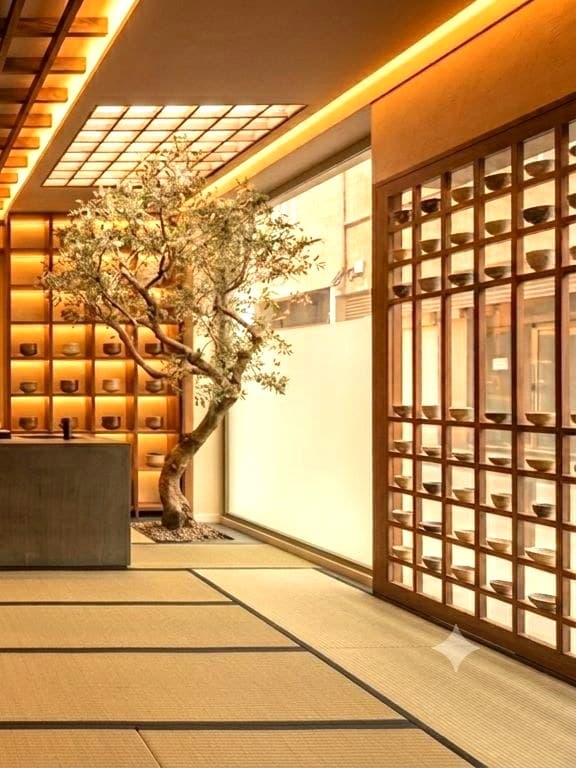
Murcia has light and orchard, and an unhurried way of being. We bring matcha to a city that knows how to wait for fruit. A salon to drink slowly, among wood and green.
The story continues in Murcia, with fifty founding members.